Websites nobody will mistake for a template.
I design and build from scratch, for one company and one job to be done. Scroll and I will show you, step by step, how an empty screen turns into a site that brings in calls.
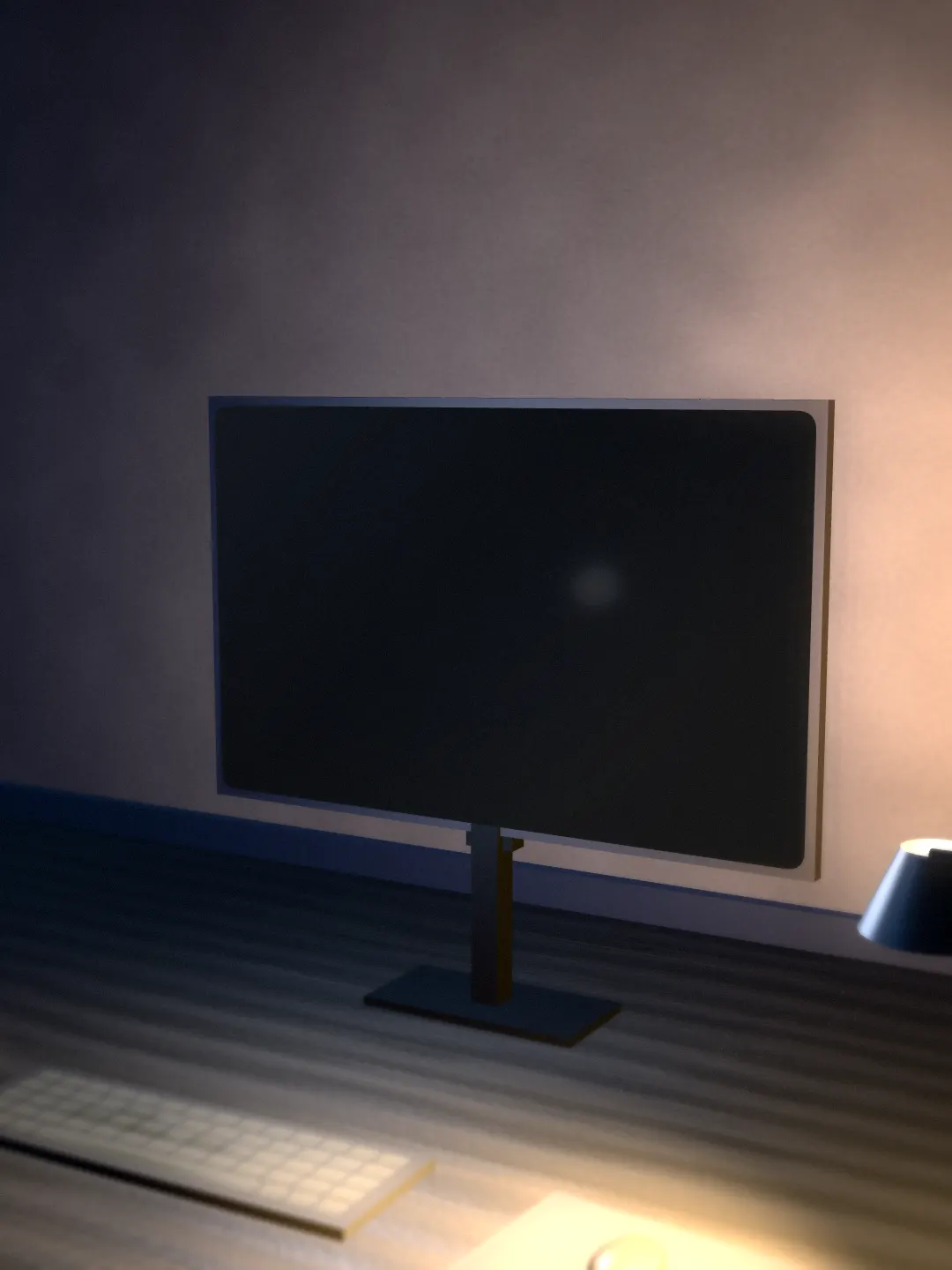
Scroll-driven opening scene: a desk at night with a dark monitor. Scrolling lights up a layout sketch on the screen, the camera moves into the screen and shows the page laid out in layers: navigation, header, hero image, copy, cards and footer. The layers line up, fill with content and merge into one finished page, which the camera finally moves into.
One laptop, every site in full.
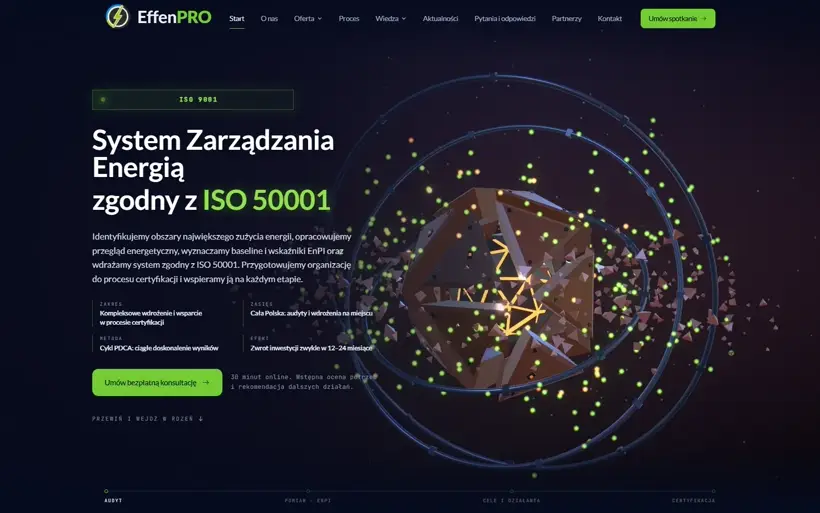
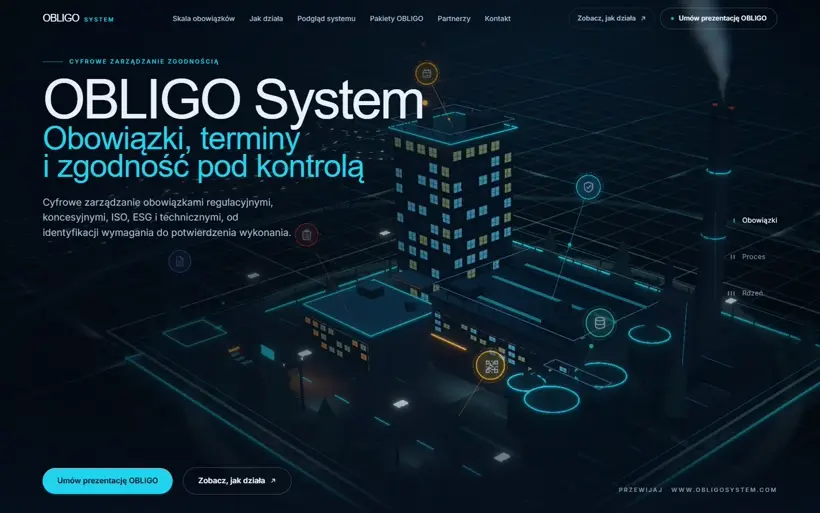
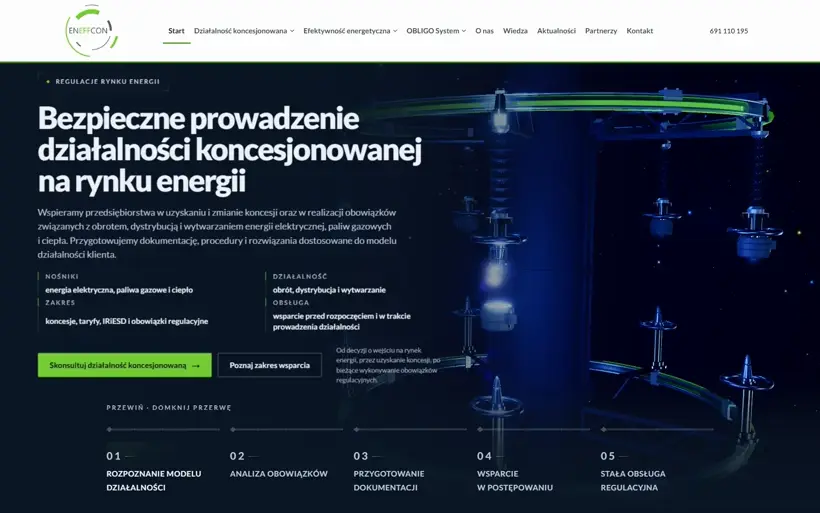
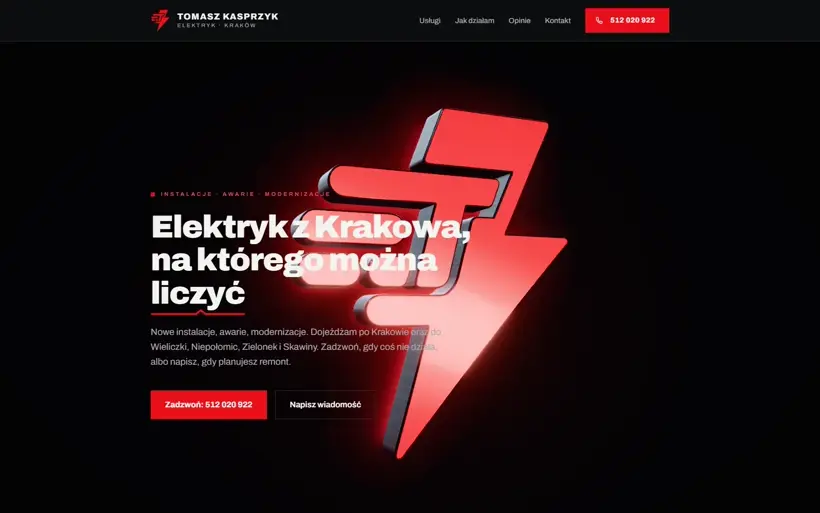
Click a tile and that site loads on the laptop screen, then scrolls itself from header to footer. Hover the screen to scroll it at your own pace. Every one of them runs live at its own address, so nothing here is a mock-up. On the shelves: 4 client projects and 3 studio demos.
Click a tile: the live site loads on screen and scrolls itself from header to footer. On the shelves: 4 client projects and 3 studio demos.
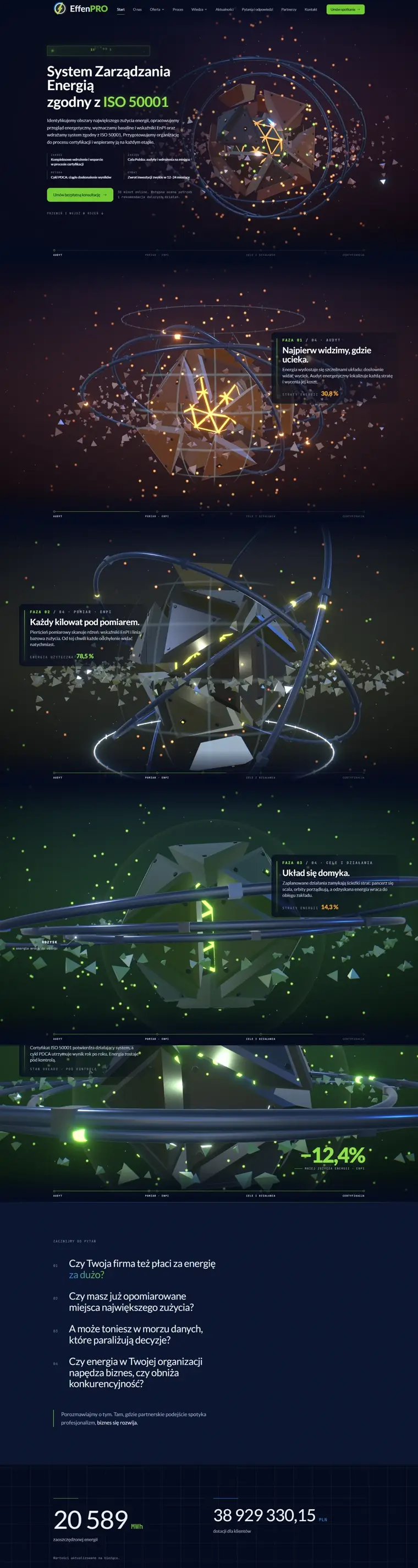
Thirteen pages about something you can't see: energy leaking out of a plant.
13pages built from scratch
- Next.js
- React Three Fiber
- GSAP
- Tailwind
EffenPRO
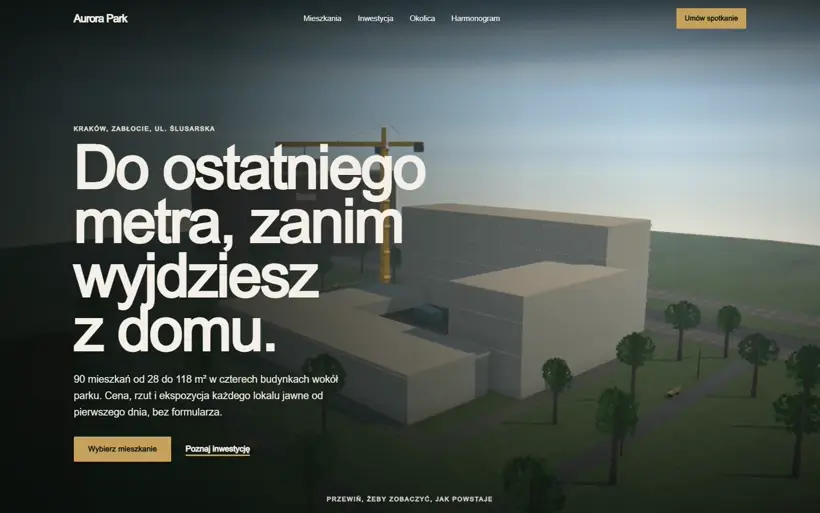
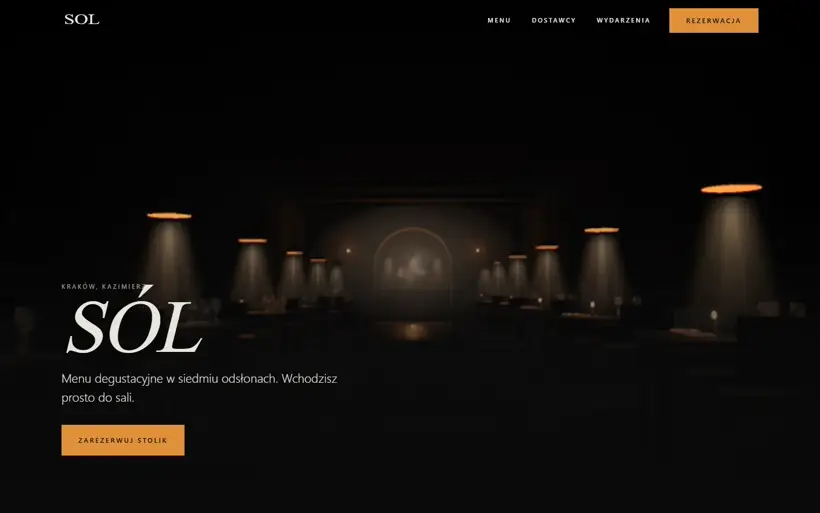
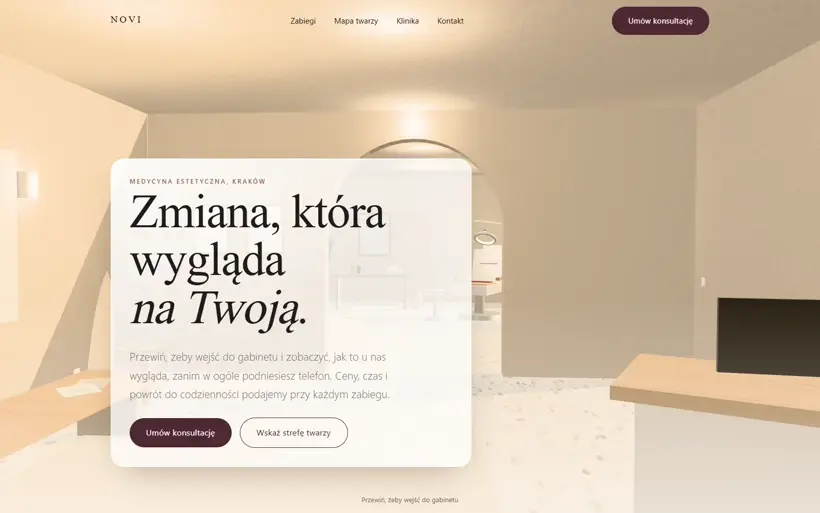
Brands marked as studio demos are invented: the names, prices and people don't describe any real company. The design, the code and the measurements are real.
Everything below can be checked in ten minutes.
- 7
- sites built from scratch, every one of them live
- 90+
- mobile Lighthouse performance points, every one of these sites
- 0
- accessibility violations in the axe-core audit
- 21
- tests guarding the engine that does the counting, not the model
Every site's address is above. Run the measurements yourself: Lighthouse in your browser, accessibility with any axe audit. I'm not asking you to take my word for it.
Three things. Each one done properly.
I don't take everything on. I take what I have the craft for, and what I can stand behind after launch. The third one is for companies, not end clients.
Websites
Design and build from scratch. Not a template with swapped photos: a site made for one company and one job to be done.
- interview, copy and information architecture
- a custom animation or 3D scene as the signature element
- Lighthouse 90+ on mobile, WCAG 2.2 AA with no exceptions
- launch, domain, certificate and handover of access
AI automation
A panel and a network of agents working on the company's own data: quoting, handling enquiries, reports. Hosted at the client's, on their own keys.
- audit: what can realistically be taken off people's plates
- a panel with a decision history, not a black box
- deployment at the client and training the team
- ongoing support and development on retainer
White-label subcontracting
For agencies and software houses that have a client and a deadline, but not enough hands. I work under your brand; the end client never has to know about me.
- one-week sprint: a production-ready module with measurements and tests
- AI builds where the code does the counting and the model only describes it
- AI Act compliance for chatbots and generated content
- an NDA, zero trace in the code, an invoice
Four things I don't negotiate on.
It can't look like AI made it
No pastel gradients, no stock-photo smiles, no “Trusted by” sections without a single logo in them. Every frame, every illustration and every sentence is made for one specific company.
Speed is part of the design
The site is measured the way your client's client will measure it: a phone, a weak connection, a throttled processor. A score below ninety points goes back for fixes, not for excuses.
Accessibility, no negotiation
Contrast, keyboard, screen reader, reduced motion. This isn't a paid extra: it's a condition of calling the work done.
One thing you'll remember
Every site gets one thing worth telling a friend about. A 3D scene, a camera fly-through, a map, a counter. Something the competition doesn't have.
You always know what's happening and when.
No disappearing for three weeks and showing up with a finished product. A live preview from day one, decisions in writing, deadlines set upfront.
Call and brief
An interview about the company, its clients and what should happen once someone lands on the site. It results in a written brief you sign off before work starts.
Direction and frames
Before the whole site exists, you see frames: typography, colour and the signature element. Changing direction here costs hours, not weeks.
Build
Code, copy, photos, animation. A live preview from day one; you comment as we go, not after the fact.
Quality gates
Performance measurement, accessibility audit, security review, language and typography check. Everything comes with numbers, handed to you in writing.
Launch
Domain, certificate, redirects, sitemap. You get access credentials and instructions for editing content yourself.
Ten demos, ten techniques, one page.
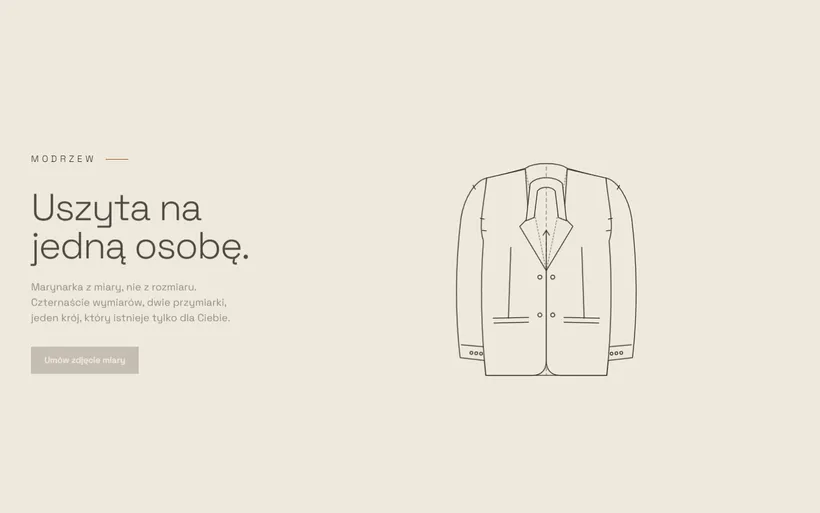
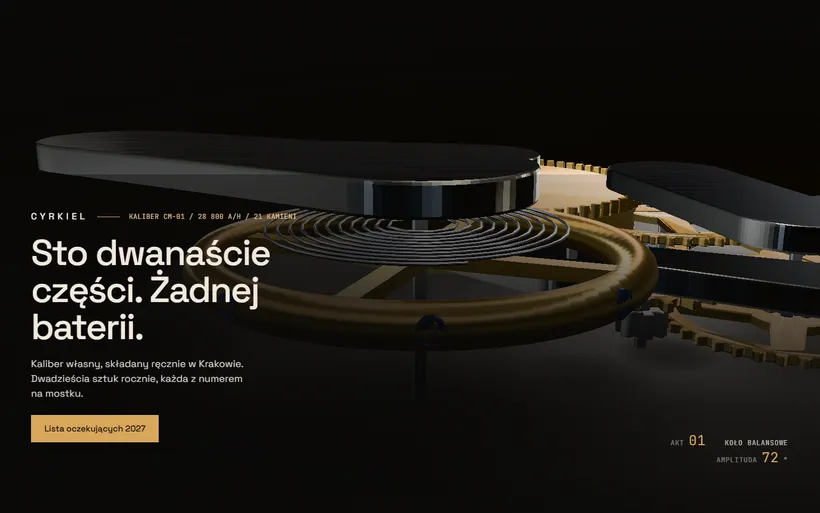
A pattern that folds into a jacket, with no WebGL. A watch calibre the camera travels through. A kiln photograph with an ember travelling across it. Live, measured on a phone.

Before you write, check whether the answer is already here.
Seven questions I hear the most, answered straight.
How much does it cost?
There is no price list, because every project has a different scope. The first call ends with a price range for the whole job, paid in stages, the same as in the services section.
How long does it take?
The brief takes 2 to 4 days, direction and first frames take 3 to 5 days, and the build itself takes 2 to 5 weeks, depending on how many pages there are. Deadlines are set in writing before the start.
Do I need finished copy and photos?
No, but the more you bring, the faster we start. Missing copy gets written together during the interview, and photos can be replaced with a 3D scene or an illustration if a photo shoot is not an option.
Will the website be mine?
Yes. After launch you get the code, domain access and every password, with no licence tying you to me. You can hand the site to another developer at any point.
What happens after launch?
You get instructions for editing content yourself, and my contact for anything else. Bigger changes and new pages are quoted separately, as a small follow-up project.
AI automation: does my company's data leave the building?
No. The panel and the agents are hosted at your place, on your own model keys, so company data never passes through my infrastructure. The panel shows every decision an agent makes, not just the result.
Subcontracting: will my client find out I built it?
Not unless you want them to. I work under your brand, we sign a non-disclosure agreement, and nothing in the code points back to me.
Tell me what your website needs to do.
I reply the same day. The first call is free and ends with something concrete: scope, timeline and a price range, not a twenty-page proposal.